

5kW Solar System Price in Pakistan – Complete Guide 2026
Are you thinking about installing solar panels at your home or business? A 5kW solar system is one of the most popular choices in Pakistan. It’s perfect for medium-sized homes and can help you save thousands of rupees on electricity bills every month.
In this guide, we’ll explain everything you need to know about the 5kW solar system price in Pakistan, including different types, battery requirements, and how much electricity it can produce.

What is a 5kW Solar System?
A 5kW solar system is a solar power setup that can generate 5 kilowatts of electricity at peak sunlight hours. This system is ideal for homes that use between 800 to 1200 units of electricity per month. Many Pakistani families choose this size because it provides enough power for daily needs without being too expensive.
The 5kW solar system price in Pakistan varies depending on the type you choose – whether it’s on-grid, off-grid, or hybrid. Let’s look at each type in detail.
5kW Solar System Prices in Major Pakistani Cities
| City | On-Grid System | Hybrid System | Off-Grid System |
|---|---|---|---|
| Karachi | Rs. 600,000 – Rs. 900,000 | Rs. 1,100,000 – Rs. 1,500,000 | Rs. 1,000,000 – Rs. 1,800,000 |
| Lahore | Rs. 580,000 – Rs. 880,000 | Rs. 1,080,000 – Rs. 1,480,000 | Rs. 980,000 – Rs. 1,750,000 |
| Islamabad | Rs. 620,000 – Rs. 920,000 | Rs. 1,120,000 – Rs. 1,520,000 | Rs. 1,020,000 – Rs. 1,850,000 |
| Rawalpindi | Rs. 590,000 – Rs. 890,000 | Rs. 1,090,000 – Rs. 1,490,000 | Rs. 990,000 – Rs. 1,780,000 |
| Faisalabad | Rs. 570,000 – Rs. 870,000 | Rs. 1,070,000 – Rs. 1,470,000 | Rs. 970,000 – Rs. 1,720,000 |
| Multan | Rs. 560,000 – Rs. 860,000 | Rs. 1,060,000 – Rs. 1,460,000 | Rs. 960,000 – Rs. 1,700,000 |
| Peshawar | Rs. 595,000 – Rs. 895,000 | Rs. 1,095,000 – Rs. 1,495,000 | Rs. 995,000 – Rs. 1,790,000 |
| Quetta | Rs. 610,000 – Rs. 910,000 | Rs. 1,110,000 – Rs. 1,510,000 | Rs. 1,010,000 – Rs. 1,820,000 |
| Sialkot | Rs. 575,000 – Rs. 875,000 | Rs. 1,075,000 – Rs. 1,475,000 | Rs. 975,000 – Rs. 1,730,000 |
| Gujranwala | Rs. 585,000 – Rs. 885,000 | Rs. 1,085,000 – Rs. 1,485,000 | Rs. 985,000 – Rs. 1,760,000 |
5kW Solar System Size
When we talk about the size of a 5kW solar system, we mean two things: the physical space it needs and its power capacity.
Physical Space Requirements:
- You’ll need approximately 350 to 450 square feet of roof space
- The panels should face south for maximum sunlight exposure
- The area should be shade-free for most of the day
Power Capacity:
- Rated capacity: 5000 watts (5kW)
- Suitable for medium to large homes
- Can power multiple appliances simultaneously
The size makes it perfect for Pakistani homes where electricity demand is moderate but consistent throughout the day.

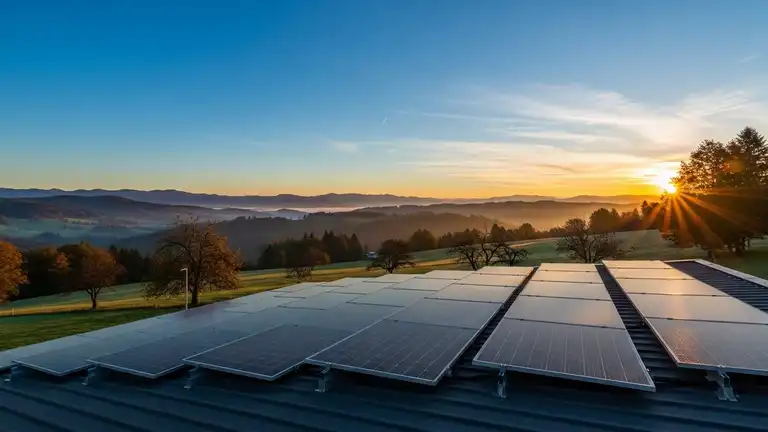
How Many Panels in 5kW Solar System
The number of solar panels you need depends on the wattage of each panel. In Pakistan, most solar companies use panels ranging from 540W to 660W.
Panel Breakdown:
- With 550W panels: You need 9 to 10 panels
- With 580W panels: You need 8 to 9 panels
- With 660W panels: You need 7 to 8 panels
Most installers in Pakistan currently use 550W or 580W panels because they offer a good balance between efficiency and cost. The total number of panels affects your roof space requirements and installation cost.
5kW Solar System Load Capacity
Understanding load capacity helps you know what appliances you can run with your solar system.
A 5kW system can typically handle:
- 5 to 6 LED lights (15W each)
- 3 to 4 ceiling fans (75W each)
- 1 refrigerator (150-200W)
- 1 washing machine (500W)
- 2 LED TVs (80W each)
- 1 water pump (750W)
- 1 air conditioner (1500W – 1 ton)
- Computer and other small appliances
The actual load capacity depends on whether your system has batteries and how much sunlight you’re getting. During peak hours, a 5kW system can power all these appliances together, but you need to manage your usage wisely.

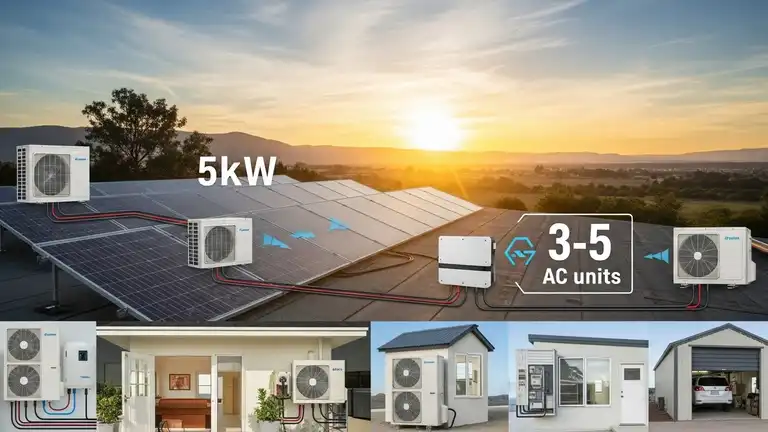
How Many AC Can Run on 5kW Solar System
This is one of the most common questions Pakistani homeowners ask, especially during summer months.
Air Conditioner Capacity:
- During peak sunlight hours: You can run 2 to 3 one-ton ACs (if no other heavy appliances are running)
- With battery backup: You can run 1 to 2 ACs depending on battery capacity
- Practical recommendation: Run 1 AC along with other household appliances for optimal performance
Remember, a 1-ton AC consumes about 1200 to 1500 watts. A 1.5-ton AC uses around 2000 watts. So if you want to run multiple ACs, you need to plan your electricity usage carefully.
For homes that need continuous AC operation, we recommend considering a larger system or adding more battery backup.
How Much Unit 5kW Solar System Produce
Power generation depends on several factors including sunlight hours, panel efficiency, and weather conditions.
Average Production in Pakistan:
- Daily production: 20 to 25 units per day
- Monthly production: 600 to 750 units per month
- Annual production: 7,200 to 9,000 units per year
Regional Variations:
- Punjab (Lahore, Multan, Faisalabad): 22-25 units daily
- Sindh (Karachi, Hyderabad): 20-23 units daily
- Khyber Pakhtunkhwa: 20-22 units daily
- Balochistan: 23-26 units daily (excellent sun exposure)
Pakistan gets excellent sunlight for 5 to 6 hours daily on average, which makes solar energy very effective here. During summer months, production can be even higher, while winter months see slightly lower output.
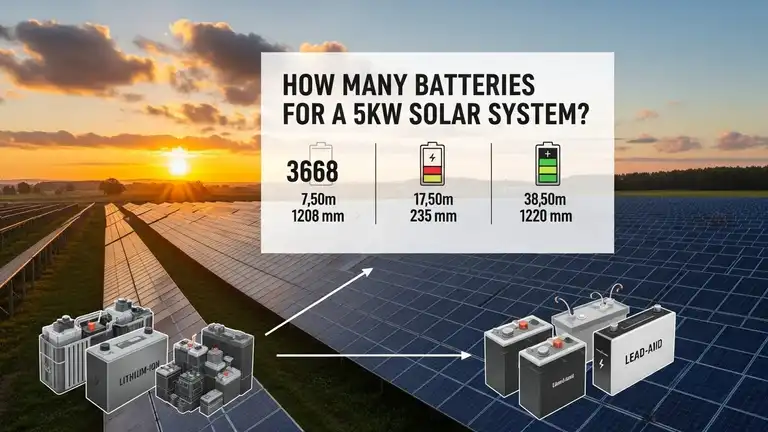
How Many Batteries for 5kW Solar System
Battery requirements depend on your backup needs and system type.
For Off-Grid Systems:
- Minimum: 4 batteries (12V, 200Ah each)
- Recommended: 6 to 8 batteries for comfortable backup
- Total capacity needed: 15 to 20 kWh
For Hybrid Systems:
- Minimum: 2 batteries (12V, 200Ah each)
- Recommended: 4 to 6 batteries
- Total capacity needed: 10 to 15 kWh
Battery Types Available:
- Lead Acid batteries: Cheaper but require maintenance
- Lithium batteries: Expensive but last longer and need no maintenance
- Tubular batteries: Good middle ground, popular in Pakistan
Most Pakistani homeowners choose tubular batteries because they offer good performance at reasonable prices. If you want backup for nighttime and load shedding hours, plan for at least 4 to 6 batteries.
5kW Solar System Without Battery Price in Pakistan
A system without batteries is called an “on-grid” system. It’s the most affordable option because you skip the battery cost.
Price Range (2025):
- Basic quality: Rs. 550,000 to Rs. 650,000
- Mid-range quality: Rs. 650,000 to Rs. 800,000
- Premium quality: Rs. 800,000 to Rs. 950,000
What’s Included:
- Solar panels (8-10 panels)
- On-grid inverter (5kW)
- Mounting structure
- DC cables and connectors
- AC/DC distribution box
- Installation and commissioning
Without batteries, this system works only when there’s sunlight or when you’re connected to WAPDA. When the sun sets or during load shedding, you’ll need grid electricity. However, you save money on your bills because solar power is used first during the day.
5kW On Grid Solar System Price in Pakistan
On-grid systems are connected to the national electricity grid. They’re perfect if you want to save money but don’t need backup power.
Current Market Prices:
- Chinese panels + Chinese inverter: Rs. 550,000 to Rs. 700,000
- Tier-1 panels + Chinese inverter: Rs. 700,000 to Rs. 850,000
- Tier-1 panels + International inverter: Rs. 850,000 to Rs. 1,000,000
Popular Brands in Pakistan:
- Panels: Longi, JA Solar, Canadian Solar, Jinko
- Inverters: Growatt, Goodwe, Huawei, SMA
The 5kW solar system price in Pakistan for on-grid is lower than other types because there’s no battery cost. You also benefit from net metering, where WAPDA buys excess electricity from you, further reducing your bills.

5kW Off Grid Solar System Price in Pakistan
Off-grid systems work independently from the electricity grid. They’re ideal for areas with frequent load shedding or no WAPDA connection.
Complete System Price:
- With lead acid batteries: Rs. 900,000 to Rs. 1,200,000
- With tubular batteries: Rs. 1,100,000 to Rs. 1,400,000
- With lithium batteries: Rs. 1,500,000 to Rs. 2,000,000
What’s Included:
- Solar panels (8-10 panels)
- Off-grid inverter with charger
- Batteries (6-8 units typically)
- Mounting structure
- Complete wiring and installation

Off-grid systems give you complete independence but cost more upfront. However, they’re perfect for rural areas or homes that want zero dependence on WAPDA.
5kW Hybrid Solar System Price in Pakistan
Hybrid systems are the best of both worlds. They connect to the grid AND have battery backup.
Complete System Price:
- With 4 batteries: Rs. 1,000,000 to Rs. 1,300,000
- With 6 batteries: Rs. 1,200,000 to Rs. 1,500,000
- With 8 batteries: Rs. 1,400,000 to Rs. 1,700,000
What Makes It Special:
- Works with or without grid connection
- Stores excess energy in batteries
- Provides backup during load shedding
- Can use net metering benefits
The 5kW solar system price in Pakistan is highest for hybrid systems, but they offer maximum flexibility and reliability. Most urban Pakistani homeowners prefer hybrid systems because they solve both the high electricity bill problem and load shedding issues.

Which System Should You Choose?
Choose On-Grid if:
- You have stable grid connection
- Load shedding is minimal in your area
- You want the lowest upfront cost
- You can work with daytime solar power
Choose Off-Grid if:
- You live in a remote area
- Load shedding is severe
- You want complete independence
- WAPDA connection is unreliable
Choose Hybrid if:
- You want backup power
- You have load shedding but also grid connection
- You can invest more upfront
- You want maximum flexibility
Factors Affecting the 5kW Solar System Price in Pakistan
Several factors influence the final price you’ll pay:
1. Panel Quality:
- Chinese panels are cheapest
- Tier-1 international panels cost 20-30% more
- Higher efficiency panels generate more power
2. Inverter Brand:
- Chinese inverters: Rs. 80,000 to Rs. 150,000
- International brands: Rs. 150,000 to Rs. 300,000
3. Battery Type and Brand:
- Lead acid: Rs. 25,000 to Rs. 35,000 per battery
- Tubular: Rs. 35,000 to Rs. 50,000 per battery
- Lithium: Rs. 100,000 to Rs. 150,000 per battery
4. Installation Quality:
- Professional installation: Rs. 30,000 to Rs. 50,000
- Mounting structure quality varies
- Proper wiring and safety measures add cost
5. Location:
- Cities like Lahore and Karachi have more competition, so prices may be lower
- Remote areas may have higher installation costs
- Transportation of equipment affects final price
Return on Investment
Let’s calculate how long it takes to recover your investment.
Example Calculation:
- Monthly electricity bill before solar: Rs. 25,000
- After installing 5kW solar system: Rs. 5,000
- Monthly savings: Rs. 20,000
- System cost (hybrid): Rs. 1,200,000
- Payback period: 60 months (5 years)
After 5 years, you essentially get free electricity for the next 20+ years, as solar panels typically last 25-30 years. This makes solar a smart long-term investment.
Government Incentives and Net Metering
The Pakistani government encourages solar adoption through various programs:
Net Metering Benefits:
- Sell excess electricity back to WAPDA
- Reduce your bill to almost zero
- Available in most major cities
SBP Financing:
- State Bank of Pakistan offers low-interest loans
- Up to 10-year payment plans
- Makes solar affordable for more people
Check with your local electricity provider about net metering availability in your area.
Maintenance and Running Costs
Solar systems require minimal maintenance:
Regular Maintenance:
- Clean panels every 2-3 months: Rs. 2,000 to Rs. 3,000
- Annual system checkup: Rs. 5,000 to Rs. 8,000
- Battery water top-up (for lead acid): Monthly
- Inverter inspection: Annual
Long-term Costs:
- Battery replacement (after 5-8 years): Rs. 150,000 to Rs. 400,000
- Inverter replacement (after 10-15 years): Rs. 100,000 to Rs. 200,000
The good news is that solar panels themselves need almost no maintenance and rarely fail.
Tips for Buying a 5kW Solar System
1. Get Multiple Quotes:
- Contact at least 3-4 solar companies
- Compare prices and warranties
- Check customer reviews online
2. Verify Quality:
- Ask for panel and inverter datasheets
- Check warranty terms (panels should have 25-year warranty)
- Ensure installer is certified
3. Calculate Your Needs:
- Review your electricity bills for last 6-12 months
- List all appliances you want to run
- Consider future electricity needs
4. Check After-Sales Service:
- Does the company provide maintenance?
- How quickly do they respond to issues?
- What’s included in warranty coverage?
5. Don’t Choose Based on Price Alone:
- Cheapest option may use low-quality components
- Poor installation can reduce system efficiency
- Good quality pays off in long run
Conclusion
The 5kW solar system price in Pakistan ranges from Rs. 550,000 for basic on-grid systems to Rs. 1,700,000 for premium hybrid systems with batteries. While the upfront cost may seem high, the long-term savings and environmental benefits make it a worthy investment.
With Pakistan’s excellent sunshine and rising electricity costs, solar energy is becoming increasingly popular. A 5kW system can produce 600-750 units monthly, which is enough to power most medium-sized homes comfortably.
Whether you choose on-grid, off-grid, or hybrid, solar power gives you control over your electricity costs and protects you from future price increases. The system typically pays for itself in 5-6 years and continues generating free electricity for another 20+ years.
Ready to go solar? Contact reputable solar companies in your area, get multiple quotes, and take the first step toward energy independence today!
Frequently Asked Questions
Can a 5kW solar system run AC?
Yes, a 5kW solar system can run AC, but it depends on the AC size and other simultaneous loads. A typical 1.5-ton AC uses about 1.5-2kW, so a 5kW system could handle one or two ACs along with some other appliances during peak sunlight hours.
What can a 5kW solar system run?
A 5kW system can power most household essentials including refrigerator, lights, fans, TV, washing machine, water pump, and computers simultaneously. It typically generates 20-25 kWh per day, enough for a medium-sized home’s daily needs excluding heavy heating or industrial equipment.


