

Daewoo Battery Price in Pakistan 2026 – Complete Buying Guide with Latest Rates
Updated : July 2026
Looking for reliable battery solutions? Daewoo batteries have become a trusted choice across Pakistan for their exceptional backup time, fast charging capabilities, and long-lasting performance.
Whether you need a battery for your car, UPS system, or solar setup, understanding the current market rates helps you make an informed decision.
In this comprehensive guide, we’ll cover everything about Daewoo battery prices, types, specifications, and where to buy them in major Pakistani cities.
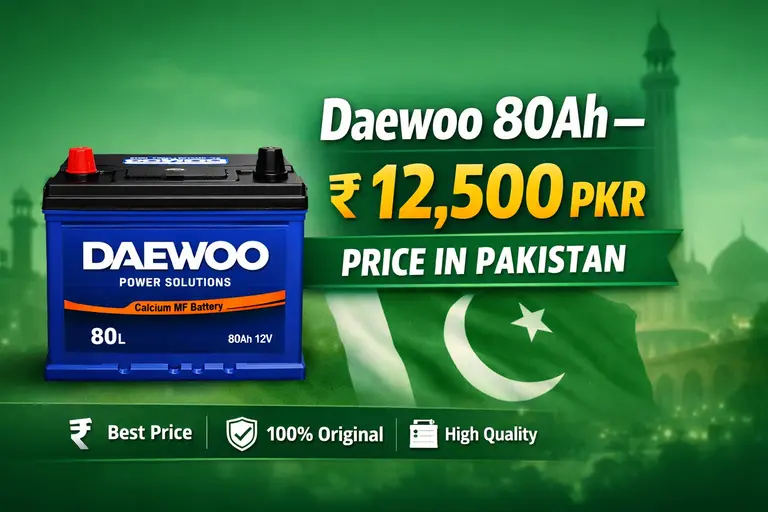
Why Choose Daewoo Batteries?
Daewoo batteries stand out in the Pakistani market for several compelling reasons. Built with advanced Korean technology, these batteries deliver consistent performance even in challenging conditions. Their deep cycle technology ensures you get maximum backup time when you need it most.
The brand offers maintenance-free solutions that eliminate the hassle of regular water refilling. This makes them particularly suitable for busy households and commercial setups where convenience matters. The sealed construction prevents acid leakage, making them safer for indoor installations.
Daewoo Battery Price List 2026
Here’s the complete price breakdown for different Daewoo battery models available in Pakistan:
| Battery Model | Capacity | Battery Type | Price Range (PKR) | Best For |
|---|---|---|---|---|
| Daewoo DIB-50 | 50Ah | Dry Cell | 8,000 – 9,000 | Small cars, motorcycles |
| Daewoo DIB-100 | 100Ah | Dry Cell | 12,000 – 13,000 | Basic UPS, small homes |
| Daewoo DIB-135 | 135Ah | Dry Cell | 14,000 – 15,000 | Mid-range UPS systems |
| Daewoo DIB-165 | 165Ah | Dry Cell | 18,000 – 19,000 | Medium homes, offices |
| Daewoo DIB-180 | 180Ah | Dry Cell | 20,000 – 22,000 | Solar systems, large UPS |
| Daewoo DIB-200 | 200Ah | Dry Cell | 23,000 – 25,000 | Heavy appliances |
| Daewoo Tubular | 180-200Ah | Tubular | 32,000 – 35,000 | Solar installations |
| Daewoo Car (Small) | 30-40Ah | Dry Cell | 8,500 – 14,000 | Compact vehicles |
| Daewoo Car (Large) | 55-80Ah | Dry Cell | 12,000 – 28,000 | SUVs, heavy vehicles |
Note: Prices vary by city and dealer. These rates were last updated in July 2026 and may change based on market conditions.

Understanding Different Daewoo Battery Types
Dry Cell Batteries
Daewoo dry cell batteries are completely maintenance-free, requiring no water top-ups throughout their lifespan. The sealed design prevents acid spills and makes them ideal for indoor use. These batteries work perfectly in cars, UPS systems, and small solar setups.
The dry technology offers faster charging compared to traditional lead-acid batteries. You can expect consistent voltage output even during heavy load conditions. This makes them reliable for critical applications where power stability matters.
Tubular Batteries
Designed specifically for deep cycle applications, Daewoo tubular batteries excel in solar systems and backup power solutions. The tubular plate design allows for deeper discharge without damaging the battery structure. This means you can use more of the stored energy before recharging.
These batteries typically last longer than standard dry cell models, often providing 4-6 years of service with proper maintenance. The higher upfront cost pays off through extended lifespan and better performance in renewable energy systems.
Car Batteries
Daewoo automotive batteries deliver reliable cold cranking performance for quick engine starts. Available in various sizes to fit different vehicle types, they work well in Pakistani weather conditions. The sealed construction protects against vibration damage common in rough road conditions.
These batteries come with sufficient reserve capacity to run your car’s electrical systems even when the engine isn’t running. Popular among Toyota, Honda, and Suzuki owners, they offer excellent value for money.
Detailed Product Reviews
Daewoo battery 180 price in Pakistan
This model has become one of the most popular choices for home backup systems. It provides enough power to run multiple fans, LED lights, a refrigerator, and even a small water pump during load shedding. The 180Ah capacity strikes a good balance between price and performance.
Most users report getting 3-4 hours of backup with moderate load, which covers typical power outage durations in most Pakistani cities. The battery charges relatively quickly, usually reaching full capacity within 6-8 hours with a proper inverter.
Expected lifespan ranges from 3-5 years depending on usage patterns and maintenance. The deep discharge capability means you can safely use up to 70% of the capacity without significantly reducing battery life.
Best suited for: Medium to large homes, small offices, retail shops
Average backup time: 3-4 hours with 300-400W load
Charging time: 6-8 hours with appropriate charger
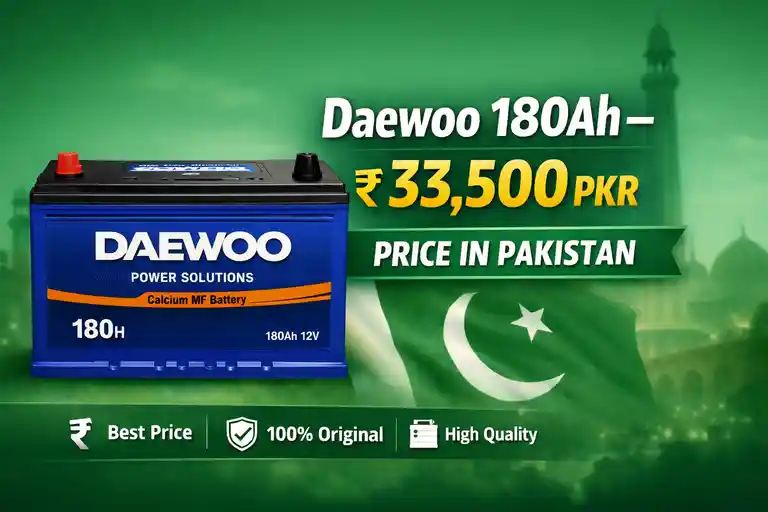
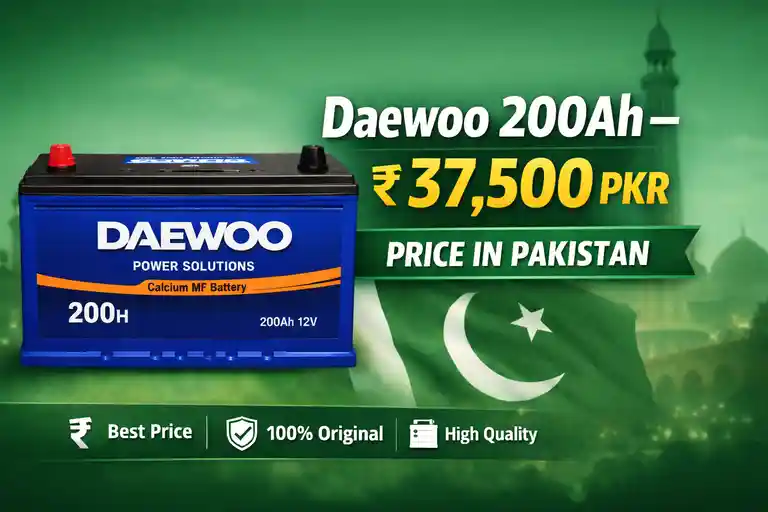
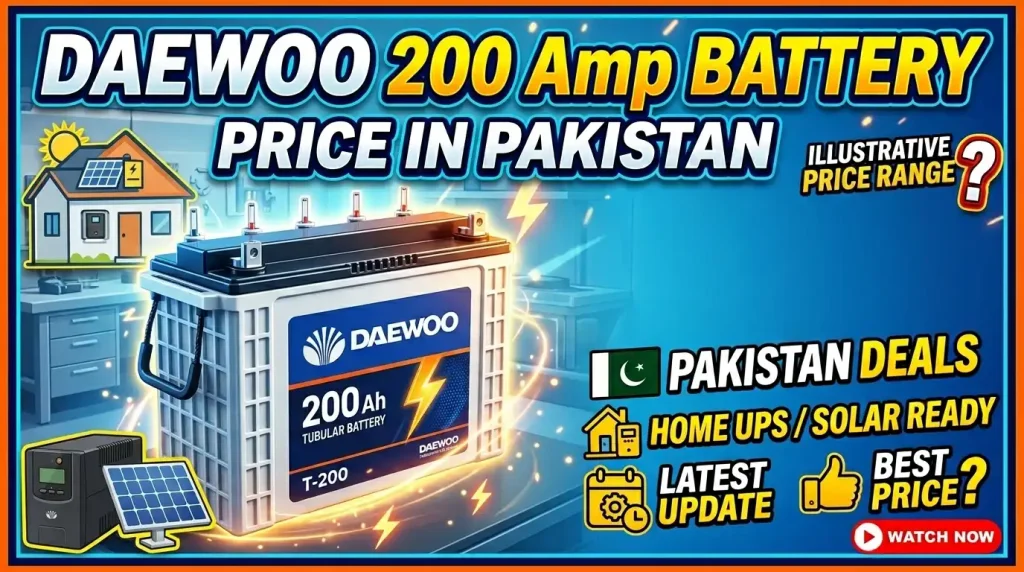
Daewoo 200Ah Battery Price in Pakistan
When you need maximum backup power, the 200Ah model delivers. This heavy-duty battery can handle substantial loads including multiple appliances running simultaneously. It’s particularly popular in areas with extended load shedding or for commercial applications.
The robust construction features thicker plates that withstand repeated deep discharge cycles. This makes it ideal for solar systems where daily cycling occurs. Many solar installers recommend this model for systems with 1000W or higher inverter capacity.
Users appreciate the consistent performance even after years of use. The higher ampere-hour rating translates to longer runtime between charges, reducing wear on the battery.
Best suited for: Large homes, commercial spaces, solar systems
Average backup time: 4-6 hours with 400-500W load
Charging time: 8-10 hours with appropriate charger
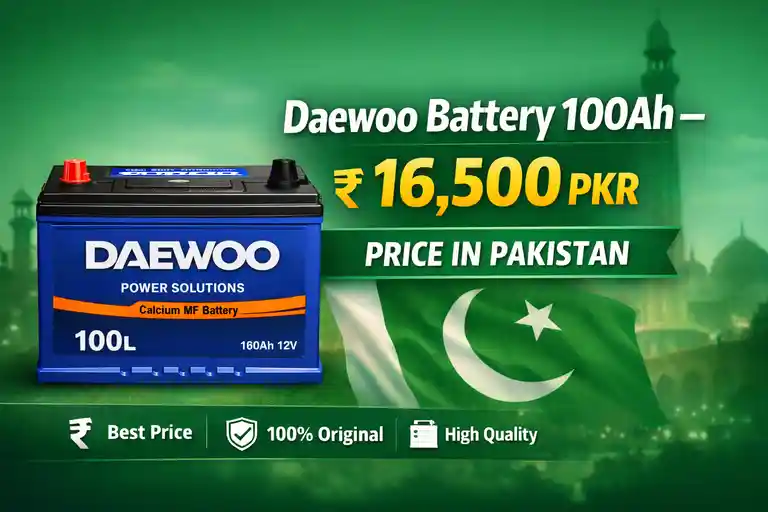
Daewoo 100Ah Battery
This entry-level model offers an affordable solution for basic power backup needs. Perfect for small apartments or as a starter battery for modest solar setups, it handles essential loads like fans, lights, and phone charging with ease.
While it won’t power heavy appliances like refrigerators or air conditioners for extended periods, it excels at keeping basic necessities running. The compact size makes installation easier in tight spaces.
Many customers use this as a secondary backup battery or for seasonal homes where power requirements are minimal. The lower price point makes it accessible for budget-conscious buyers.
Best suited for: Small apartments, basic UPS needs, budget setups
Average backup time: 2-3 hours with 200-250W load
Charging time: 5-6 hours with appropriate charger
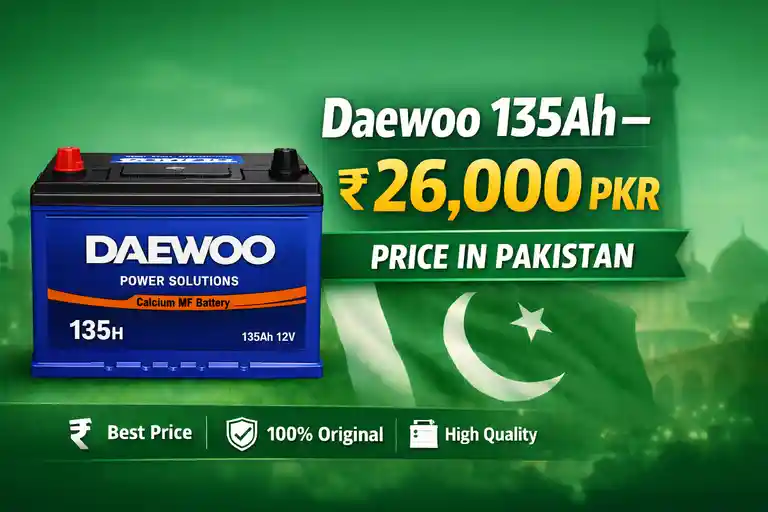
Daewoo 135Ah Battery
Sitting between the 100Ah and 165Ah models, this battery offers a practical middle ground. It provides enough capacity for most household needs without the higher cost of larger models. The 135Ah rating supports moderate loads comfortably.
This model works well for homes with 2-3 hour load shedding patterns. You can run essential appliances while maintaining good battery health. The balanced specifications make it a popular choice among first-time UPS buyers.
The charging efficiency is notably good, with most units reaching full charge faster than higher capacity models. This means less waiting time between power cuts.
Best suited for: Medium homes, small offices, moderate load requirements
Average backup time: 3-3.5 hours with 250-350W load
Charging time: 6-7 hours with appropriate charger
Daewoo Tubular Battery
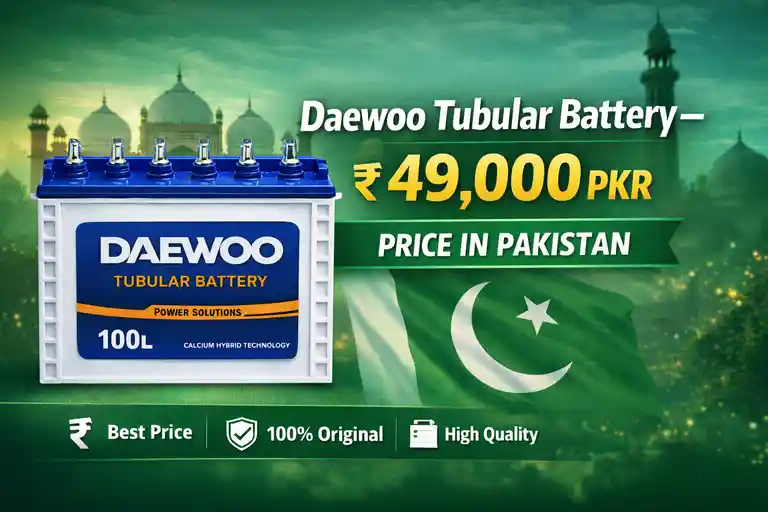
Premium performance comes with the tubular series. These batteries use advanced plate technology that significantly extends lifespan in cycling applications. If you’re setting up a solar system or need daily deep discharge capability, tubular technology is the right choice.
The tubular design allows for better electrolyte circulation and reduces plate degradation. This translates to more charge-discharge cycles over the battery’s life. Most tubular batteries last 5-7 years with proper care, nearly double the lifespan of standard dry batteries.
While the initial investment is higher, the cost per year of use often works out better than cheaper alternatives. Solar system owners particularly appreciate the consistent performance across thousands of cycles.
Best suited for: Solar installations, hybrid inverters, premium UPS systems
Average lifespan: 5-7 years with proper maintenance
Cycle life: 1500-2000 deep cycles
Daewoo 165Ah Battery
This capacity hits the sweet spot for many Pakistani households dealing with regular load shedding. The 165Ah rating provides sufficient backup without being oversized for typical home requirements. It handles mixed loads efficiently, from fans and lights to computers and televisions.
Users report reliable performance across different seasons, with minimal capacity loss during hot summers. The battery maintains voltage stability even as charge depletes, ensuring consistent appliance operation.
Installation is straightforward, fitting standard UPS and inverter setups without modifications. The warranty support and service availability add to the overall value proposition.
Best suited for: Average homes with regular load shedding, mixed appliance loads
Average backup time: 3.5-4 hours with 300-400W load
Charging time: 7-8 hours with appropriate charger

Daewoo dry battery price in Pakistan
Daewoo dry batteries are maintenance-free and popular for vehicles in Pakistan. They don’t need water refills. Prices start from around 10,000 rupees for small car batteries.
Medium-size dry batteries cost 12,000 to 18,000 rupees. Heavy-duty truck batteries can cost 20,000 to 30,000 rupees depending on specifications.
Daewoo Car Batteries
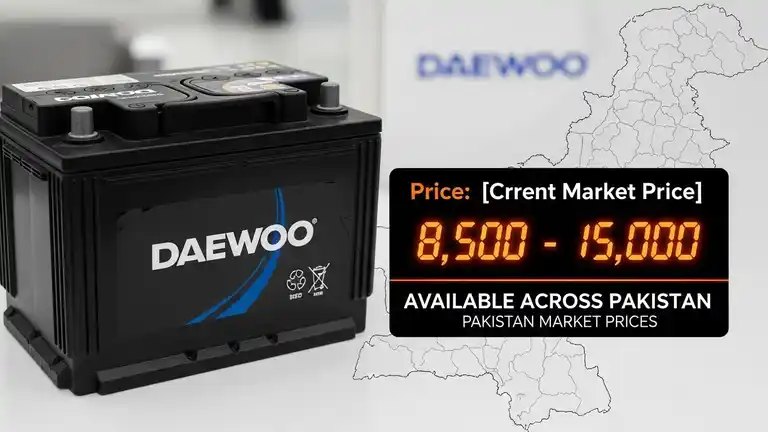
Automotive applications demand different characteristics than stationary batteries. Daewoo car batteries excel in providing high cranking amps for reliable starts, even in cold weather or after extended parking periods.
The range includes options for small hatchbacks up to large SUVs and pickups. Each model is sized appropriately for the vehicle’s electrical demands. The sealed construction prevents corrosion and extends terminal life.
Many mechanics and car owners trust Daewoo for their vehicles due to consistent performance and reasonable pricing. The batteries typically last 2-4 years in Pakistani driving conditions, which is competitive with other premium brands.
Small car batteries (30-40Ah): Suitable for city cars, small hatchbacks
Large car batteries (55-80Ah): Designed for sedans, SUVs, pickup trucks
Warranty period: Typically 12-18 months depending on model
How to Choose the Right Daewoo Battery
Selecting the appropriate battery involves considering several factors beyond just price. Start by calculating your power requirements. List all appliances you want to run during power outages and their wattage. Add these up to get your total load.
Next, determine how long you need backup power. Multiply your total load by desired backup hours to get the watt-hours needed. Divide this by your inverter’s voltage (usually 12V) to find the required amp-hour capacity.
Consider future expansion when sizing your system. If you might add more appliances or solar panels later, choosing a slightly larger battery now saves replacement costs. However, avoid oversizing too much as batteries perform best when regularly cycled within their design range.
Think about your space constraints and installation location. Larger batteries need adequate ventilation and sturdy mounting. Ensure your inverter or charge controller is compatible with the battery capacity you’re choosing.
Budget plays a role, but focus on total cost of ownership rather than just purchase price. A more expensive tubular battery might cost less per year than repeatedly replacing cheaper dry cell batteries.
Comparing Daewoo with Other Brands
The Pakistani battery market offers several alternatives toDaewoo, each with distinct characteristics. AGS batteries compete directly in the premium segment, often priced similarly. Phoenix batteries provide budget-friendly options with decent performance. Exide holds strong market presence with wide dealer networks.
Daewoo batteries generally offer better deep discharge capabilities than similarly priced AGS models. The Korean technology provides consistent quality control across production batches. However, AGS sometimes edges ahead in terms of warranty coverage and service centers.
Compared to Phoenix, Daewoo costs 15-25% more but typically lasts longer and maintains capacity better over time. For buyers prioritizing longevity over upfront cost, Daewoo presents better value. Phoenix suits situations where initial budget constraints outweigh long-term considerations.
Exide matches Daewoo in build quality but often prices slightly higher. The choice between these brands often comes down to dealer availability and personal preference. Both deliver reliable performance for most applications.
Local brands like volta and osaka offer significantly lower prices but compromise on lifespan and backup time. They work for non-critical applications but aren’t recommended for important power backup needs.

Installation and Setup Tips
Proper installation significantly impacts battery performance and lifespan. Always place batteries on a firm, level surface away from direct sunlight and heat sources. Maintain at least 6 inches of clearance around the battery for ventilation, as batteries generate heat during charging.
Connect terminals carefully, ensuring tight connections without over-tightening. Apply petroleum jelly or terminal protector spray to prevent corrosion. Always connect positive to positive and negative to negative to avoid damaging the battery or inverter.
Use appropriate cable sizes for your battery capacity. Undersized cables cause voltage drops and heating, reducing efficiency. For 100-200Ah batteries, use minimum 6-8 gauge cables for connections under 3 feet.
If installing multiple batteries, wire them correctly for your system voltage. Series connection (positive to negative) increases voltage, while parallel connection (positive to positive) increases capacity. Never mix old and new batteries in the same bank.
Position batteries in well-ventilated areas to dissipate charging gases safely. Avoid enclosed spaces without ventilation, especially in living areas. A dedicated battery room or outdoor installation under shade works best.

Maintenance Guidelines for Maximum Lifespan
Even maintenance-free batteries benefit from regular inspection. Check terminals monthly for corrosion or loose connections. Clean any buildup with a wire brush and baking soda solution, then rinse with water and dry thoroughly.
Monitor charging behavior through your inverter display. Batteries should reach full charge within expected timeframes. If charging takes significantly longer or never completes, this indicates potential problems requiring professional attention.
Avoid deep discharge whenever possible, even though Daewoo batteries handle it better than some brands. Try to recharge once battery drops to 40-50% capacity. This practice extends cycle life considerably.
Keep batteries at moderate temperatures when possible. Extreme heat accelerates internal degradation while extreme cold reduces available capacity temporarily. If batteries must be in very hot locations, ensure maximum ventilation.
For tubular batteries, check water levels every 3-4 months despite being low-maintenance. Top up with distilled water only if levels drop below the recommended mark. Never use tap water as minerals damage the plates.
Equalization charging every few months helps balance cell voltages and remove sulfation. Most modern inverters include this function. Run equalization cycles according to manufacturer recommendations, typically every 3-6 months.
Common Problems and Solutions
Battery not charging fully: Check inverter settings and ensure charging current is appropriate for battery size. Verify all connections are secure and clean. If problem persists, test battery voltage with a multimeter to determine if cells are damaged.
Reduced backup time: This usually indicates aging or sulfation. Try running equalization charge cycles. If performance doesn’t improve, the battery may need replacement. Also verify your load hasn’t increased beyond battery capacity.
Swollen battery case: This serious issue results from overcharging or internal failure. Disconnect immediately and replace the battery. Never attempt to use a swollen battery as it poses safety risks.
Corrosion on terminals: Clean terminals thoroughly and apply protective coating. Excessive corrosion might indicate overcharging or poor ventilation. Address the root cause to prevent recurrence.
Battery getting very hot during charging: Some warming is normal, but excessive heat indicates problems. Check if charging current is too high for battery capacity. Ensure adequate ventilation around the battery.
Where to Buy Daewoo Batteries in Pakistan
Karachi
Karachi hosts numerous authorized Daewoo dealers across the city. Saddar and Shershah markets offer competitive pricing with multiple shops for comparison. Many dealers provide home delivery within the city. Online platforms also serve Karachi with doorstep delivery and installation services.
Expect to find the full range of Daewoo products in Karachi, from small car batteries to large tubular models. Competition among dealers often results in better prices and after-sales service. Most shops offer installation assistance and warranty registration.
Lahore
As Pakistan’s second-largest market, Lahore has extensive Daewoo battery availability. Hall Road and Township areas concentrate battery dealers. The competitive market often features exchange offers where you get credit for old batteries toward new purchases.
Lahore dealers frequently run promotional discounts, especially during summer when demand peaks. Many shops provide free installation and battery testing services. Warranty support is readily available through multiple service centers.
Islamabad/Rawalpindi
The twin cities host premium battery outlets with complete Daewoo ranges. G-11 Markaz and Saddar Rawalpindi serve as major battery market hubs. Dealers here often maintain better service standards and cleaner inventory.
While prices might be slightly higher than other cities, the service quality and product authenticity are generally more reliable. Many dealers cater to both residential and commercial clients with customized solutions.
Faisalabad
Faisalabad’s textile industry creates high demand for industrial batteries, benefiting retail customers with good availability. Dealers typically offer free installation and replacement warranties. The competitive market keeps prices reasonable.
Several shops provide comparison services, testing your old battery and recommending appropriate replacements. This helps customers make informed decisions rather than just buying the most expensive option.
Peshawar
Battery dealers in Peshawar serve both local and tribal area markets. Karimpura and Saddar Road host multiple dealers with Daewoo products. Some dealers specialize in solar batteries given the increasing adoption of solar systems in the region.
Prices are generally competitive with national averages. Warranty support exists through authorized dealers, though service center access might be more limited than major cities.

Online Shopping vs Physical Stores
Purchasing batteries online offers convenience and often better prices due to lower overhead costs. Major e-commerce platforms list Daewoo batteries with delivery to most cities. Customer reviews help gauge product quality and seller reliability.
However, batteries are heavy and fragile items requiring careful handling during shipping. Inspect batteries immediately upon delivery for any damage. Verify manufacturing date as batteries lose capacity over time even when unused.
Physical stores allow you to inspect products before purchase and get immediate expert advice. Experienced dealers can assess your specific needs and recommend appropriate models. You also establish a relationship for future service needs.
For first-time buyers, visiting physical stores provides valuable learning opportunities. You can see different models, understand size differences, and ask questions. Dealers often include free installation with purchase, saving you hassle.
Online purchases work well when you know exactly what you need and the seller has strong reputation. Combine online research with physical store consultation for the best buying experience.
Warranty and After-Sales Support
Daewoo batteries typically come with 12-24 months warranty depending on the model and dealer. Tubular batteries often carry longer warranty periods reflecting their premium positioning. Always verify warranty terms before purchase and retain your receipt.
Warranty usually covers manufacturing defects but excludes damage from misuse, overcharging, or physical damage. Some dealers offer extended warranty options for additional cost. Consider this for expensive tubular models where replacement costs are significant.
Register your warranty promptly after purchase. Some manufacturers require registration within 30 days for warranty validation. Keep documentation safe as you’ll need it for any claims.
Service centers in major cities handle warranty claims and technical support. Response times vary by location and season, with longer waits during peak summer months. Authorized dealers typically process claims faster than independent shops.
For issues outside warranty, local repair shops can handle most battery problems. However, opening sealed batteries voids warranty and may pose safety risks. Consult professionals before attempting repairs.
Money-Saving Tips
Buy during off-season (winter months) when demand drops and dealers offer better prices. Summer months see 10-15% price increases due to high demand. Planning ahead saves money while ensuring availability.
Consider exchange offers where dealers give credit for old batteries. This reduces net cost while ensuring proper disposal of old batteries. Some dealers offer better exchange rates than others, so compare multiple shops.
Proper maintenance extends battery life significantly, reducing replacement frequency. Following charging guidelines and keeping terminals clean can add 1-2 years to battery lifespan. This saves more than buying cheaper batteries that need frequent replacement.
Size your battery correctly rather than oversizing or undersizing. An oversized battery wastes money upfront while undersizing leads to premature failure from excessive discharge. Calculate requirements carefully before purchasing.
Buy complete systems (battery, inverter, charger) from single dealers for package discounts. Dealers often negotiate better prices when selling complete solutions rather than individual components.
Join online communities and forums where users share dealer experiences and pricing information. This helps identify reliable sellers and current market rates across different cities.
Environmental Considerations
Lead-acid batteries contain hazardous materials requiring proper disposal. Never dispose of old batteries in regular trash or open areas. Lead contamination harms soil and water sources, affecting community health.
Most battery dealers accept old batteries for recycling when you purchase new ones. They send them to authorized recycling facilities where lead and plastic are recovered. This recycling process reduces environmental impact significantly.
Proper battery maintenance reduces replacement frequency, decreasing environmental burden. Each battery recycled prevents several kilograms of lead and sulfuric acid from entering the environment.
Consider your power consumption patterns and work to reduce unnecessary usage. Lower power requirements mean smaller batteries with less environmental impact. Energy-efficient appliances reduce both backup needs and environmental footprint.
Solar systems combined with batteries create cleaner energy solutions compared to generator backup. While batteries have environmental costs, they’re significantly cleaner than burning fossil fuels in generators.
Future Trends in Battery Technology
The Pakistani battery market is gradually shifting toward newer technologies. Lithium-ion batteries are slowly entering the market, offering longer lifespan and better efficiency than lead-acid batteries. However, their high cost currently limits adoption to premium applications.
Some manufacturers are developing hybrid systems combining lithium and lead-acid technologies. These systems aim to balance performance benefits of lithium with affordability of lead-acid batteries. Such solutions might become mainstream in coming years.
Smart battery management systems are becoming more common, providing detailed monitoring through smartphone apps. These systems help optimize charging, predict maintenance needs, and extend battery life through better management.
Recycling infrastructure is improving with more formal collection and processing facilities. This trend will make battery ownership more environmentally sustainable while potentially reducing costs through recovered materials.
Solar adoption continues accelerating across Pakistan, driving demand for deep-cycle batteries. This increased volume might lead to better prices and more model options specifically optimized for solar applications.
Frequently Asked Questions
What is the price range of Daewoo batteries in Pakistan?
Prices vary based on the model, capacity (Ah), and retailer, but generally Daewoo batteries in Pakistan range between PKR 8,000 to PKR 25,000+, depending on size and features.
Which Daewoo battery models are available in Pakistan?
Common Daewoo battery models sold in Pakistan include:
Daewoo SMF (Sealed Maintenance Free)
Daewoo Tubular
Daewoo Automotive batteries (for cars)
Daewoo Inverter batteries
Where can I check current Daewoo battery prices?
You can check prices:
At local battery dealers
Online marketplaces (Daraz, OLX, etc.)
Authorized Daewoo distributors
E‑commerce sites that list battery prices & delivery
Final Recommendations
Daewoo batteries represent a solid middle ground in Pakistan’s battery market. They cost more than budget brands but significantly less than premium imports while delivering reliable performance. For most residential and commercial applications, they provide excellent value.
Choose dry cell models (DIB series) for cars, basic UPS systems, and small solar setups. Their maintenance-free operation and competitive pricing make them practical for typical backup needs. The 135-180Ah range suits most homes dealing with regular load shedding.
Invest in tubular batteries for solar installations or applications requiring daily deep cycling. The higher upfront cost pays back through extended lifespan and better cycle performance. Commercial users and those with heavy power requirements benefit most from tubular technology.
Buy from authorized dealers to ensure genuine products and valid warranty. While prices vary slightly between sellers, product authenticity and proper warranty support matter more than small price differences. Establish relationships with reliable dealers for future needs.
Consider your complete power backup strategy rather than focusing solely on battery price. The right inverter, proper installation, and good maintenance practices matter as much as battery quality. A balanced system approach delivers better results than simply buying the most expensive battery.
Last Updated: July 2026
Disclaimer: Prices mentioned are approximate and vary by dealer, city, and market conditions. Always verify current rates with dealers before purchasing. This guide provides information only and does not constitute professional electrical advice. Consult qualified technicians for system design and installation.


