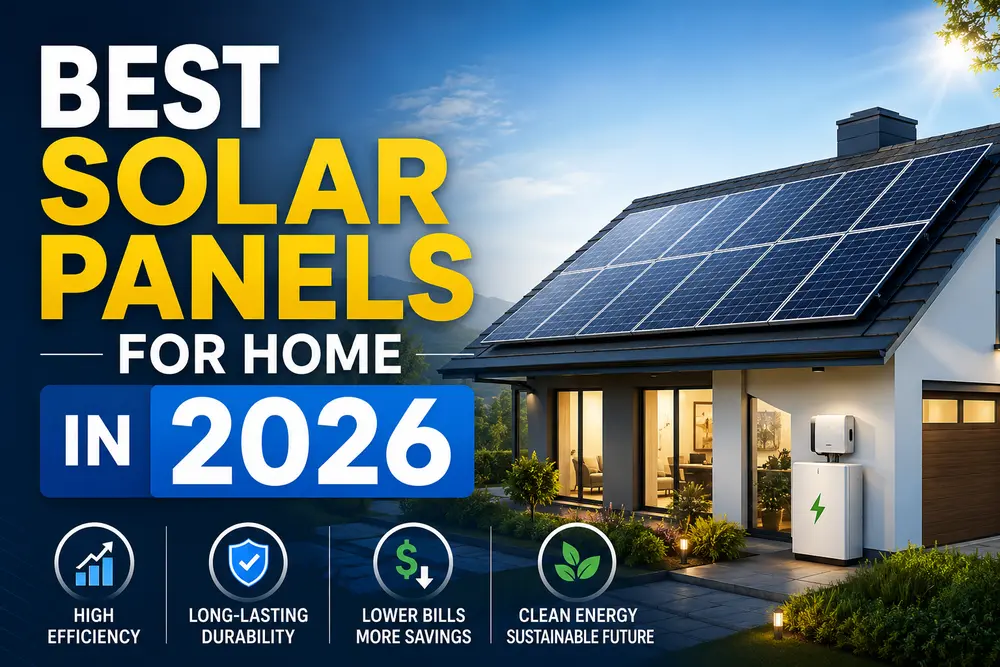
Best Solar Panels for Home in 2026
Expert Reviews, Brand Comparisons & Complete Buying Guide for US Homeowners
Updated 2026 | Top Brands • Efficiency • Home Value • DIY Options • Reviews
Choosing the best solar panels for home installation is one of the biggest decisions you will make as a homeowner in the United States. With dozens of solar panel manufacturers and hundreds of models available, it can feel overwhelming.
This guide cuts through the noise and gives you clear, honest answers based on real performance data.

We cover the best solar panels 2026 has to offer, ranked by efficiency, warranty, price, and real-world reliability. We review every major brand — from SunPower solar panels to Canadian Solar panels to budget-friendly DIY solar panels for home kits.
We also answer the questions homeowners ask most: do solar panels save money, do they increase home value, and how do they actually work on a house?
Whether you are planning a full residential solar panels installation or just starting to research your options, this guide gives you everything you need to make a confident decision.
Quick verdict: SunPower Maxeon leads in efficiency (24.1%). Q CELLS is the best overall value. Canadian Solar is the top budget Tier-1 pick. For most US homes, any high-quality monocrystalline panel from a Tier-1 brand will deliver excellent performance for 25+ years.

What Makes the Best Solar Panel for Home Use?
Understanding what to look for helps you evaluate any brand or model confidently. Here are the five factors that matter most for high efficiency solar panels and long-term performance:
1. Efficiency
Efficiency measures what percentage of sunlight a panel converts to electricity. High efficiency solar panels (20%+) produce more power from less roof space — critical for homes with limited or partially shaded roofs.
| Efficiency Range | Panel Quality | Best For |
| 22–24% | Premium monocrystalline | Small roofs, maximum output |
| 19–22% | Standard monocrystalline | Most US homes — excellent choice |
| 15–18% | Polycrystalline | Large unshaded roofs on tight budgets |
| 10–13% | Thin-film | Commercial flat roofs (rarely residential) |

2. Warranty
The best solar panel brands stand behind their panels with 25-year product and performance warranties. The performance warranty guarantees panels still produce at least 80–92% of rated output after 25 years. Never accept less than a 12-year product warranty from any Tier-1 manufacturer.
3. Degradation Rate
All panels lose a small percentage of output each year. Premium panels degrade at 0.25–0.30% per year; budget panels at 0.50–0.70%. Over 25 years, this compounds significantly — a low-degradation panel from a brand like SunPower will produce thousands more kilowatt-hours than a budget panel with the same initial rating.
4. Temperature Coefficient
Panels lose efficiency as temperatures rise. The temperature coefficient measures how much output drops per degree Celsius above 25°C. A coefficient of -0.26%/°C (about -0.47%/°F) is far superior to -0.45%/°C (budget brands) — especially important in hot states like Arizona, Texas, and Florida where summer temperatures regularly exceed 100 degrees Fahrenheit (37.8°C).
5. Manufacturer Stability
Your warranty is only valuable if the solar panel manufacturers backing it are still in business. Stick with Tier-1 brands — those with at least 10 years in the market, strong financials, and a track record of honoring claims. Every brand reviewed below qualifies as Tier-1.
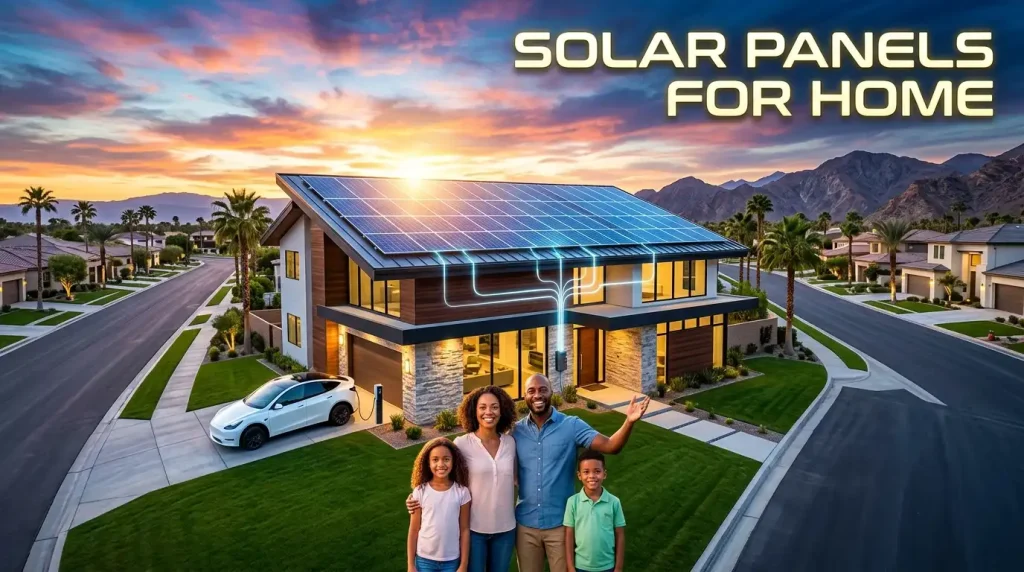
Solar Panel Types: Which Is Right for Your Home?
Monocrystalline Solar Panels — Best Choice for Most Homes
Monocrystalline solar panels are made from a single continuous silicon crystal, giving them the highest efficiency and the most uniform dark appearance. They dominate the US residential market because they produce the most power per square foot, perform better in heat and low-light, and carry the longest warranties.
For virtually any home solar system, monocrystalline is the right choice. Every top-rated panel in this guide uses monocrystalline technology.
Bifacial Solar Panels — Worth the Premium?
Bifacial solar panels generate electricity from both the front (direct sunlight) and back (reflected light) surfaces. In ideal conditions — ground-mounted systems or light-colored rooftops — they can boost output by 5–30%.
For standard residential rooftop installation on dark shingles, bifacial panels offer minimal benefit (5–8%) and are rarely worth the price premium. 590W bifacial solar panels and similar high-wattage bifacial options are better suited to ground-mounted commercial or utility installations where reflected light is plentiful.
For RV use specifically: bifacial panels need clearance below the panel surface to capture reflected light — difficult to achieve on a flat RV roof. Standard monocrystalline panels are usually the better choice for RV solar.
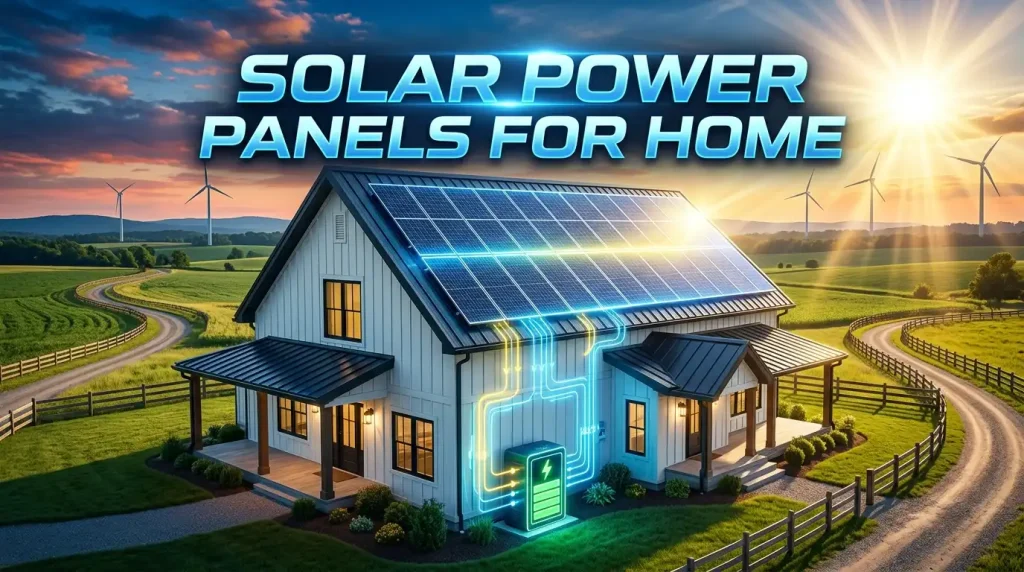
Polycrystalline and Thin-Film
Polycrystalline panels are cheaper but require more roof space for the same output. Thin-film panels are flexible but have the lowest efficiency of all types. For residential solar panels on a standard home, monocrystalline is almost always the right answer.
Best Solar Panel Brands: Complete 2026 Reviews
Here is how every major brand stacks up for home solar installation in 2026. These solar panel reviews are based on independent performance data, warranty terms, and real installer and homeowner feedback.
| Brand | Top Model | Peak Efficiency | Warranty | Price Tier | Best For |
| SunPower (Maxeon) | Maxeon 7 | 24.1% | 40 years | Premium | Maximum efficiency, small roofs |
| REC Group | REC Alpha | 22.3% | 25 years | Premium | Low-light climates, high value |
| Panasonic | EverVolt HK | 22.2% | 25 years | Premium | Hot climates, low degradation |
| Q CELLS | Q.PEAK DUO BLK | 21.4% | 25 years | Mid-range | Best overall value — top pick |
| Silfab Solar | Elite | 21.4% | 30 years | Mid-range | American-made, longest warranty |
| Aptos Solar | DNA Series | 21.8% | 30 years | Mid-range | Premium specs at mid-range price |
| Canadian Solar | HiHero | 22.8% | 25 years | Budget Tier-1 | Best efficiency at budget price |
| Jinko Solar | Tiger Neo | 22.3% | 25 years | Budget Tier-1 | High volume, reliable quality |
| Trina Solar | Vertex S+ | 22.0% | 25 years | Budget Tier-1 | Dependable mid-range option |
| LG Solar | NeON R | 22.0% | 25 years | Premium | Excellent quality (limited supply) |
SunPower / Maxeon Solar Panels — Best Efficiency
SunPower solar panels, sold under the Maxeon solar panels brand, are the efficiency leader for home solar. The Maxeon 7 achieves 24.1% efficiency — the highest commercially available for residential installation. Their temperature coefficient of -0.26%/°C and degradation rate of just 0.25%/year mean these panels outperform competitors even more over time than the initial efficiency gap suggests.
SunPower backs their panels with a 40-year combined product and performance warranty — unmatched by any competitor. They cost 25–40% more than mid-range options, but for homeowners with small or shaded roofs where every watt matters, SunPower delivers a genuinely superior product.
Q CELLS Solar Panels — Best Overall Value
Q CELLS solar panels — made by Hanwha Q CELLS solar panels division — offer the best balance of efficiency, reliability, and price in the US market. The Q.PEAK DUO BLK series reaches 21.4% efficiency with a 25-year warranty, and panels manufactured at their Georgia facility qualify for domestic content bonuses under the Inflation Reduction Act.
Q CELLS consistently ranks among the top performers in independent PVEL lab testing and is the preferred brand of many U.S. solar installers. For most American homeowners, Q CELLS is our top recommendation — strong performance at a fair price, backed by a financially solid global company.
Canadian Solar Panels — Best Budget Tier-1
Canadian Solar panels deliver remarkable value. Their HiHero series achieves 22.8% efficiency — more than many premium brands — at prices 20–30% below SunPower or REC. Canadian Solar is one of the world’s largest solar panel manufacturers, ensuring financial stability and supply chain reliability for warranty support.
The ideal choice for homeowners who want proven Tier-1 quality without premium pricing. Particularly good for larger installations where maximizing system size per dollar is the priority.
REC Solar Panels — Premium Low-Light Performance
REC solar panels from the REC Alpha series achieve 22.3% efficiency using twin-panel technology that reduces internal resistive losses. REC panels perform especially well in diffuse light conditions — overcast skies, morning, and evening — making them the top pick for Pacific Northwest and New England homeowners where cloud cover is common.
Backed by Reliance Industries (one of Asia’s largest conglomerates), REC has strong warranty support infrastructure. A premium option that competes directly with Panasonic and sits just below SunPower in the performance hierarchy.
Panasonic Solar Panels — Best for Hot Climates
Panasonic solar panels (EverVolt series) use proprietary HIT cell technology that delivers industry-leading temperature performance. With a temperature coefficient of -0.26%/°C matching SunPower, and a degradation rate of just 0.26%/year, Panasonic panels hold their output better in heat than almost any competitor.
The top choice for homes in Arizona, Nevada, Texas, and other hot-climate states where summer temperatures significantly affect panel output. The 25-year warranty and strong brand recognition make them a reliable long-term investment.
Silfab Solar Panels — Best American-Made
Silfab solar panels are manufactured in North America (Ontario, Canada and Bellingham, Washington), making them the premier choice for homeowners who prioritize domestic manufacturing. The Elite series reaches 21.4% efficiency with an exceptional 30-year product and performance warranty — among the best in the industry.
Silfab panels qualify for the domestic content bonus under the Inflation Reduction Act, potentially adding 10% on top of the standard 30% federal tax credit for commercial and utility buyers. For residential buyers, American manufacturing means easier warranty support and stronger supply chain continuity.
Aptos Solar Panels — Budget Premium Option
Aptos solar panels are an underrated option that consistently outperforms expectations. The DNA Series delivers 21.8% efficiency with a 30-year warranty at prices closer to mid-range brands — giving homeowners premium-tier specs without the premium price tag. Worth including in your quote comparison.
Jinko Solar Panels — World’s Best-Seller
Jinko solar panels are the best-selling solar panels in the world by volume, and the Tiger Neo series delivers 22.3% efficiency at competitive prices. Jinko’s manufacturing scale means strong quality control and financial stability for warranty support. A reliable, well-priced option from one of the industry’s most established manufacturers.
Trina Solar Panels — Dependable Mid-Range
Trina solar panels (Vertex S+ series) offer 22.0% efficiency and represent a solid, dependable mid-range choice. Trina has been manufacturing solar panels since 1997 — one of the longest track records in the industry — and their panels are widely available through US installers and distributors.
LG Solar Panels — Premium Quality (Limited Availability)
LG solar panels (NeON R series) delivered 22.0% efficiency and excellent build quality during their production run. However, LG Solar exited the panel manufacturing business in 2022. New LG panels are no longer produced; warranty claims on existing systems are handled through LG Electronics. If you see LG panels in a quote, verify warranty support arrangements before proceeding.

Building a Complete Home Solar System
The best solar panels for home are only one piece of a complete home solar system. Here is what a full residential installation includes:
| Component | Role | Typical Cost | Top Brands |
| Solar panels | Convert sunlight to DC electricity | $3,000 – $8,000 | See brand guide above |
| String inverter | Converts DC to AC electricity | $1,000 – $2,000 | SolarEdge, Fronius, SMA |
| Microinverters | Per-panel DC-AC (best for shaded roofs) | $2,000 – $4,000 | Enphase IQ8 series |
| Roof racking | Mounts panels securely to roof | $500 – $1,500 | IronRidge, Unirac |
| Battery storage | Stores excess energy for night/outages | $8,000 – $15,000 | Tesla Powerwall, Enphase |
| Monitoring system | Real-time production tracking | $200 – $500 | Included with most inverters |
How Many Panels Does Your Home Need?
| Monthly Bill | System Size | Panels Needed (400W) | Roof Space |
| $80 – $120 | 4 – 5 kW | 10 – 13 panels | 200 – 260 sq ft |
| $120 – $180 | 5 – 7 kW | 13 – 18 panels | 260 – 360 sq ft |
| $180 – $250 | 7 – 9 kW | 18 – 23 panels | 360 – 460 sq ft |
| $250 – $350 | 9 – 11 kW | 23 – 28 panels | 460 – 560 sq ft |
| Over $350 | 11 – 13 kW | 28 – 33 panels | 560 – 660 sq ft |
Always size your system based on 12 months of electricity bills — not just one month. Summer and winter usage vary significantly. A properly sized home solar system should cover your full annual electricity consumption.
Common Questions: Do Solar Panels Really Work?
Do Solar Panels Work at Night?
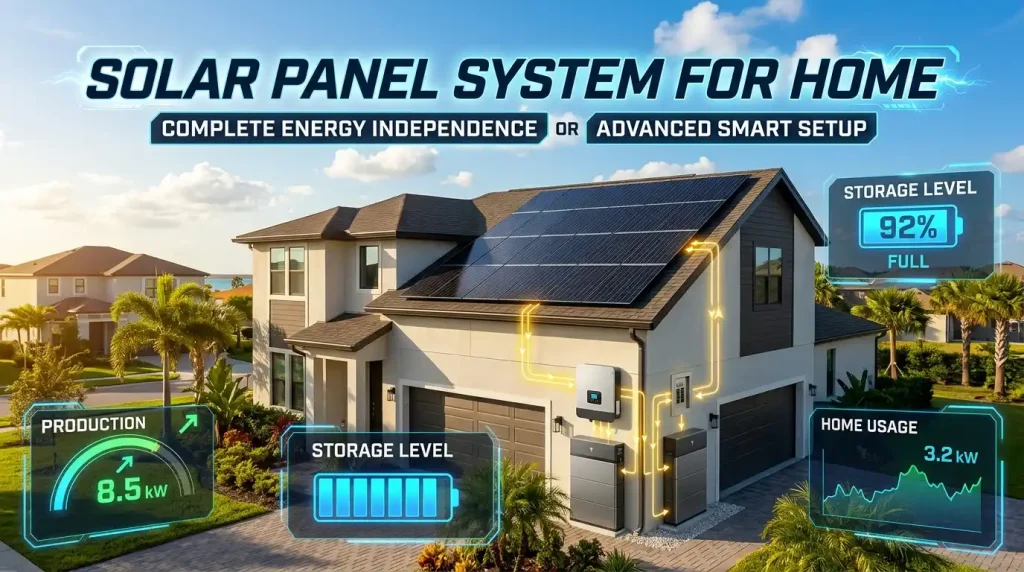
Solar panels do not generate electricity at night — they require photons from sunlight to operate. However, this does not mean you will be without power. Do solar panels work at night in a practical sense depends on your setup:
- With battery storage: Your home battery stores daytime surplus for use after sunset — true energy independence around the clock
- With net metering (grid-tied): Your utility credits you for daytime surplus and supplies grid power at night — often at net zero cost
For most US homeowners with grid-tied systems, nighttime power is a non-issue. Your panels overproduce during the day, your meter earns credits, and you draw from the grid at night using those credits. Monthly net cost is often near zero.
Do Solar Panels Work on Cloudy Days?
Yes — do solar panels work on cloudy days? They do, at reduced output. Here is what to expect based on solar panel energy facts from real-world installations:
- Thin clouds: 50–70% of normal output
- Heavy overcast: 10–25% of normal output
- Rain: Minimal output — but rain cleans dust off panels, slightly improving output on sunny days after
Germany — famously cloudy — is one of the world’s top solar producers per capita. Pacific Northwest and New England homeowners with quality panels still generate strong annual output despite frequent cloud cover.
How Do Solar Panels Work on a House?
How do solar panels work on a house? Here is the process step by step:
- Sunlight hits your rooftop solar panels and photons knock electrons loose in the silicon cells — producing direct current (DC) electricity
- Your inverter converts DC to alternating current (AC) — the type your appliances and outlets use
- AC electricity flows through your home’s electrical panel, powering lights, appliances, and devices
- Surplus electricity flows to the utility grid through your meter, earning you credits under net metering
- At night or on high-demand days, you draw from the grid — offset by the daytime credits you have built up
The entire process is automatic. Once installed and activated, your system works silently every day the sun shines — no maintenance required beyond occasional cleaning.
Solar Panels as a Home Investment
Do Solar Panels Increase Home Value?
Yes — studies consistently confirm that solar panels increase home value for owned systems. Research from Lawrence Berkeley National Laboratory found homes with solar sell for an average of $15,000 more than comparable non-solar homes, roughly 3–4% of home value.
This makes solar panels home investment decision one of the clearest financial choices available to homeowners. On a $400,000 home, a 4% premium equals $16,000 in added value — which in many markets covers a significant portion of the after-incentive system cost. Add lifetime electricity savings, and the financial case for solar is compelling.
Important: this premium applies only to owned solar systems. Leased panels can complicate home sales because buyers must qualify to assume the lease. Ownership — whether cash or loan — is almost always preferable for resale value.
Do Solar Panels Save Money?
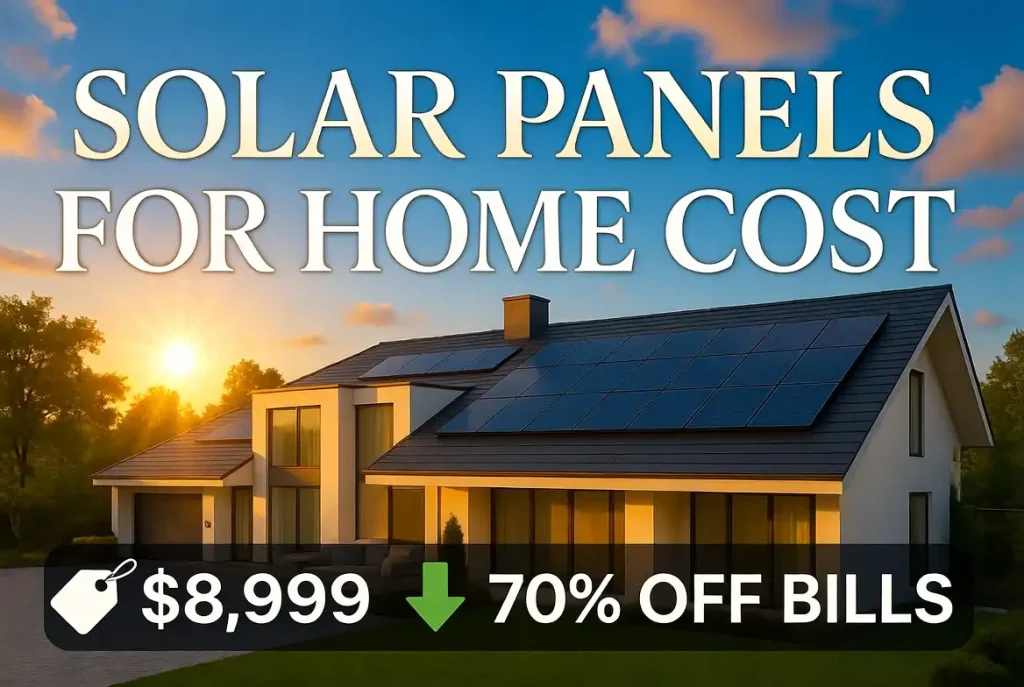
Do solar panels save money? For most US homeowners who own their systems: yes, significantly. Here is the realistic savings picture:
| Time Period | Financial Reality |
| Year 1–10 (loan payoff) | Monthly loan payment ≈ electricity savings — net cost often near $0 |
| Year 6–10 (payback point) | System has saved enough to cover its full after-incentive cost |
| Year 11–25 (post-payoff) | No loan payment + no electric bill = $1,000–$3,000+ pure savings per year |
| 25-year total | Average homeowner saves $20,000–$50,000 vs. paying rising utility rates |
The key variable is your electricity rate across the United States. Homeowners in California ($0.22–$0.35/kWh), Massachusetts ($0.20–$0.28/kWh), and New York ($0.18–$0.26/kWh) see the fastest payback. Even in low-rate states, solar typically delivers a positive 25-year return.
Solar Panels and Home Insurance
Solar panels house insurance is straightforward for most homeowners:
- Most standard homeowners policies cover solar panels as a permanent home fixture — no separate policy needed
- Notify your insurer before installation so they can update your dwelling coverage amount
- Your premium may rise $10–$30/month to reflect the higher replacement cost
- Panels are covered against wind, hail, fire, and falling objects under standard policies
- For leased panels, the leasing company typically carries commercial coverage — confirm this in writing

Rooftop Solar Panels: Is Your Home Ready?
Before you buy solar panels for home installation, your roof needs to meet certain conditions:
| Factor | Ideal | If Not Ideal |
| Roof age | Under 10 years | Re-roof first — panels last 25+ years |
| Orientation | South-facing | East/west reduces output 10–20% |
| Shading | None 9am–3pm | Use microinverters to minimize losses |
| Roof material | Asphalt shingle or metal | Tile/flat roofs need special mounts (cost more) |
| Structural load | Can handle 3–4 lbs/sq ft | Structural reinforcement may be needed (rare) |
Most US homes with asphalt shingle rooftop solar panels are excellent candidates. A free site assessment from any certified installer confirms your roof’s suitability before you commit.

Solar Kits for Home: DIY Options
Solar kits for home — from brands like Renogy, EcoFlow, and Jackery — give experienced DIYers a way to go solar at 30–50% lower cost by eliminating labor fees.
- Best for: Off-grid cabins, RVs, sheds, supplemental power systems
- DIY solar panels for home projects require electrical knowledge and must still comply with local permit requirements for grid-tied systems
- Tax credit: Equipment purchased for DIY solar qualifies for the 30% federal tax credit
- Limitation: For whole-home grid-tied systems, professional installation is almost always the better choice — permits, utility interconnection, and warranty protection require a licensed contractor
If you are handy and want to offset a portion of your power usage without a full installation, a quality solar kit is a legitimate option. For a primary home system, professional installation delivers better long-term results.

How to Choose and Buy Solar Panels for Your Home
- Calculate your electricity needs. Pull 12 months of bills and find your average monthly kWh usage. This drives your system size.
- Assess your roof. South-facing, unshaded, structurally sound, with at least 200 sq ft of usable space is ideal.
- Choose your panel tier. Small roof or maximum output? SunPower or REC. Best value? Q CELLS. Budget Tier-1? Canadian Solar or Jinko.
- Get 3–5 quotes from NABCEP-certified installers. Compare on cost per watt, panel brand, inverter type, and 25-year savings estimates.
- Confirm all incentives. Every quote should reflect the 30% federal tax credit plus any state rebates available in your area.
- Review the full warranty. Panel warranty (25+ years), inverter warranty (10–25 years), workmanship warranty (5–10 years).
- Choose your payment method. Cash gives fastest payback. A solar loan often delivers near-zero net monthly cost. Leasing is convenient but less profitable long-term.
- Sign and schedule installation. Typical timeline from contract to activation is 1–3 months including permits and utility interconnection.

Best solar panel brands tip: Do not make your decision based on price alone. The cheapest installer often cuts corners on permits, equipment, or warranty support. Read Google and Better Business Bureau (BBB) reviews carefully before signing.
Frequently Asked Questions
What are the best photovoltaic panels for home use?
The best photovoltaic panels for residential use in 2026 are SunPower Maxeon 7 (highest efficiency at 24.1%), Q CELLS Q.PEAK DUO (best value), and Canadian Solar HiHero (best budget Tier-1 at 22.8%). All are monocrystalline photovoltaic panels with 25+ year warranties.
How do solar panel reviews compare brands accurately?
The most reliable solar panel reviews combine independent lab data (from PVEL or DNV GL annual scorecards), homeowner feedback on EnergySage and SolarReviews, and installer preference surveys. Brand-sponsored reviews and marketing materials should be read critically. For technical performance, PVEL’s annual PV Module Reliability Scorecard is the gold standard.
What solar panel energy facts should I know before buying?
Key solar panel energy facts for US homeowners: the average panel produces 300–400 kWh per year per kilowatt of capacity. A 6kW system in a sunny state generates 8,000–9,500 kWh/year — enough for most homes. Panels lose about 0.5% efficiency per year on average. After 25 years, quality panels still produce 85–90% of their original output. The US generated over 200 gigawatts of installed solar capacity in recent years — enough to power tens of millions of homes.
What is the best home solar system for off-grid use?
For off-grid homes, a complete home solar system needs: solar panels sized for your average daily usage, a battery bank large enough for 2–3 days of cloudy weather, a charge controller, and an inverter. For most off-grid homes, a 5–10kW panel array paired with a 20–40 kWh battery bank provides reliable year-round power.
What are the best solar panels for home use with a tight budget?
On a tight budget, Canadian Solar panels (HiHero series) offer the best combination of efficiency and price — 22.8% at budget-tier pricing. Jinko Solar panels (Tiger Neo) are equally competitive. Both are genuine Tier-1 manufacturers with strong warranty support. Avoid no-name panels from unknown manufacturers, even if they are significantly cheaper — the risk of early failure and warranty abandonment is not worth the savings.
How does solar panels for home price compare to long-term savings?
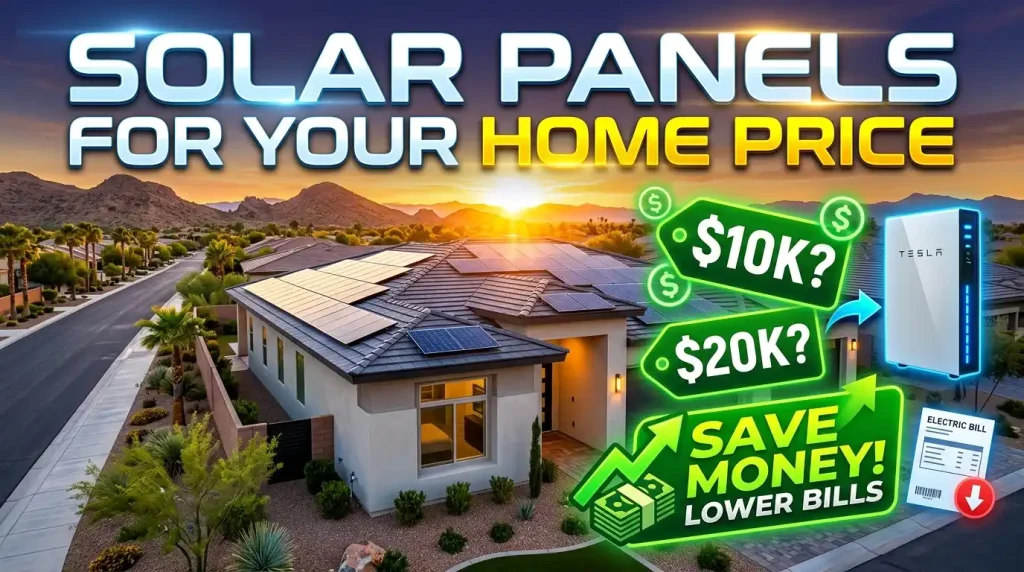
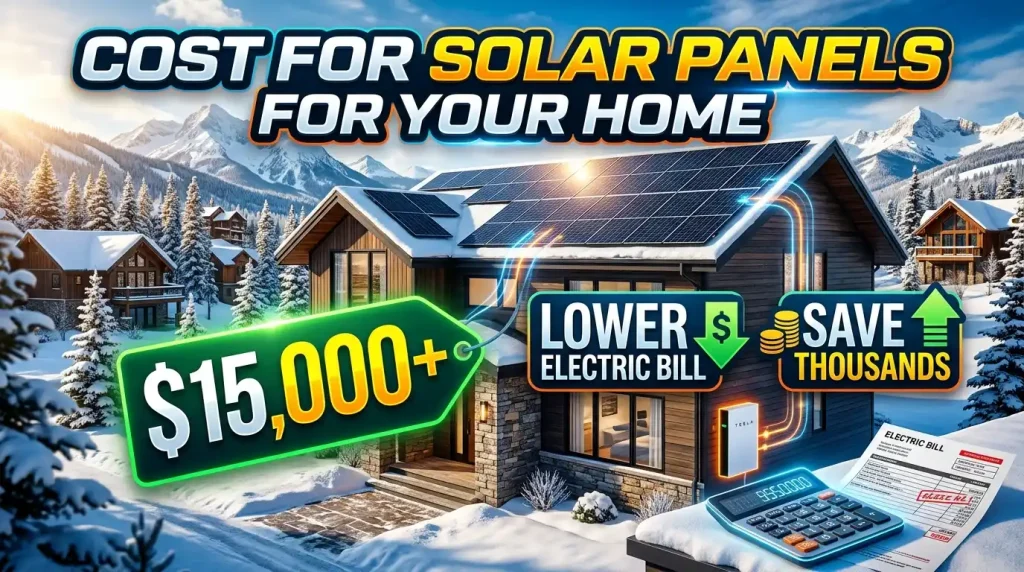
The solar panels for home price typically runs $10,500–$21,000 after the 30% tax credit for most US homes. Over 25 years, the average homeowner saves $20,000–$50,000 on electricity. This means most homeowners recover their full after-incentive solar panels for home cost within 6–12 years and enjoy 13–19 years of essentially free electricity after that.

What is the best solar panels for home in 2026 for a whole-house system?
For a whole-house system powering all your appliances, HVAC, and potentially an electric vehicle, the best setup in 2026 is: Q CELLS Q.PEAK DUO panels (best value at scale), SolarEdge or Enphase inverters, and a Tesla Powerwall or Enphase IQ Battery for backup storage. This combination delivers excellent efficiency, mature warranty support, and the flexibility to add battery capacity in the future.
Final Verdict: Best Solar Panels for Home 2026
| Your Priority | Best Panel Choice | Why |
| Maximum efficiency | SunPower Maxeon 7 | 24.1% — best in class, 40-yr warranty |
| Best overall value | Q CELLS Q.PEAK DUO | 21.4%, US-made, 25-yr warranty, competitive price |
| Best budget Tier-1 | Canadian Solar HiHero | 22.8% at budget pricing — exceptional value |
| American manufacturing | Silfab Solar Elite | North American made, 30-yr warranty |
| Hot climate homes | Panasonic EverVolt | Best temperature coefficient (-0.26%/°C) |
| Small or shaded roofs | SunPower or REC Alpha | Highest watts per square foot |
| DIY / off-grid | Renogy or EcoFlow kits | Purpose-built solar kits, easy to install |
Whichever brand you choose, the fundamentals are the same: get multiple quotes from certified installers, choose Tier-1 panels with at least a 25-year warranty, confirm all available incentives, and select financing that aligns with your long-term ownership goals.
Solar is a 25-year investment in your home, your finances, and the environment. The best panels for your home are the ones that match your roof, your budget, and your goals — installed by a certified professional who will stand behind their work.
Ready to find the best solar panels for your home? Get free quotes from NABCEP-certified installers in your area. Compare brands, efficiency ratings, and 25-year savings side by side — and make your decision with full confidence.
This guide is based on independent research and is not sponsored by any solar manufacturer or installer.
Always verify specifications and installer credentials before making any purchase decision.